Ayurvedic Diet for Vata, Pitta & Kapha: Know Your Body Type
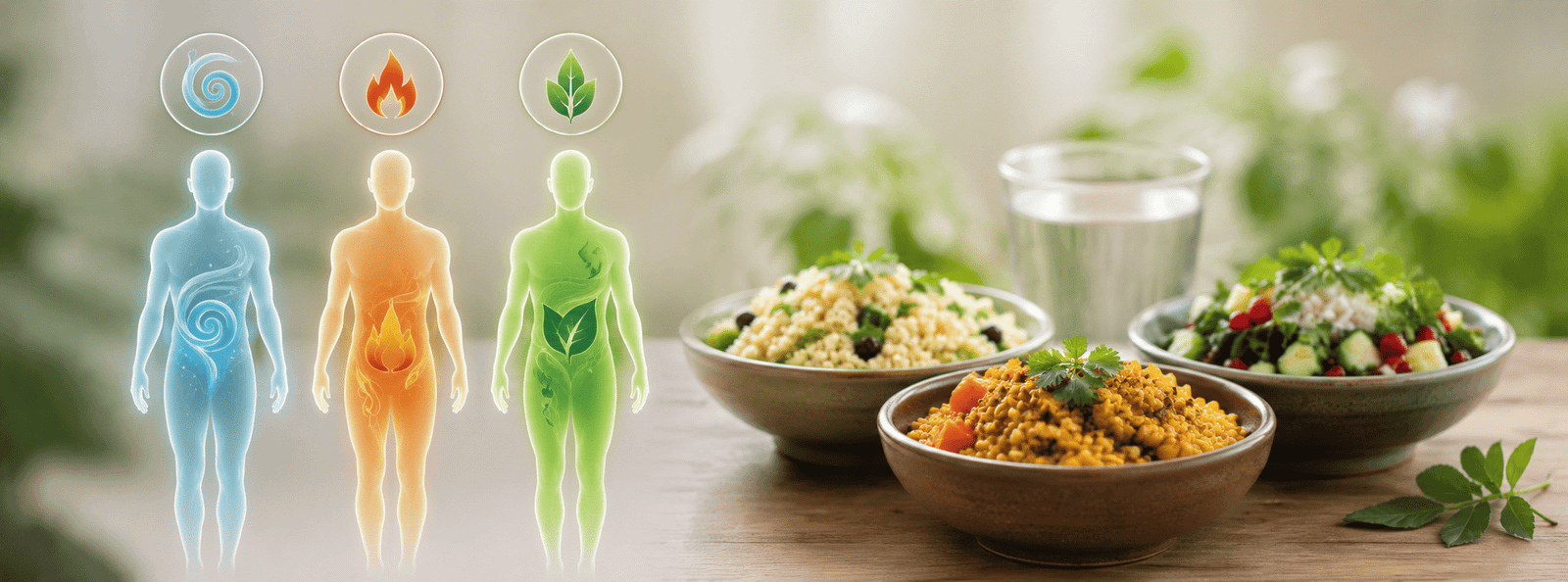
Have you ever noticed that one person can eat almost anything without digestive problems while another experiences bloating, acidity, or fatigue after the same meal? Ayurveda explains this through the concept of Prakriti, or your natural body constitution. According to this ancient system of medicine, every individual is born with a unique combination of three biological energies known as Vata, Pitta, and Kapha. These doshas influence not only your physical appearance but also your digestion, metabolism, emotions, sleep patterns, and overall health.
Unlike modern diet plans that recommend the same eating habits for everyone, Ayurveda believes there is no universal diet. The foods that nourish one person may create imbalance in another. By understanding your dominant dosha, you can make better food and lifestyle choices that support your body’s natural balance and help prevent disease.
Understanding the Three Doshas
The three doshas are formed from the five natural elements—earth, water, fire, air, and space. Every person has all three doshas, but one or two usually dominate. These dominant doshas determine your body type, personality, digestive strength, and even the way your body responds to different seasons and foods.
A balanced dosha supports good health, while an imbalance may contribute to digestive disorders, fatigue, skin problems, stress, weight gain, or other health concerns. This is why Ayurveda focuses on maintaining harmony between the doshas through proper nutrition and daily routines.
Vata Body Type
Vata is formed from the elements of air and space and is responsible for all movement in the body. It controls breathing, circulation, communication between the nervous system, and muscle movement. People with a dominant Vata constitution are often energetic, creative, and enthusiastic. They enjoy new experiences and tend to think quickly, but they can also become anxious or overwhelmed when their Vata is out of balance.
Physically, Vata individuals usually have a lean body frame with dry skin, rough hair, and prominent veins. Their appetite may change from day to day, and they often have sensitive digestion. Because Vata is naturally cold and dry, these individuals generally prefer warm climates, warm meals, and regular routines.
How Should a Vata Person Eat?
The digestive fire of a Vata person is often irregular, making it important to eat meals at consistent times each day. Freshly cooked, warm, and nourishing foods are easier to digest than raw or refrigerated meals. Soups, stews, porridges, cooked vegetables, and whole grains help provide the warmth and moisture that Vata requires.
Healthy fats such as ghee and sesame oil are especially beneficial because they help reduce dryness within the body. Mild digestive spices, including ginger, cinnamon, garlic, cumin, and cardamom, can further support digestion without causing irritation.
On the other hand, excessive consumption of dry cereals, raw salads, packaged snacks, cold drinks, and gas-forming vegetables such as cabbage, cauliflower, broccoli, and mushrooms may aggravate Vata. These foods can increase bloating, constipation, and digestive discomfort.
By choosing warm, nourishing meals and maintaining regular eating habits, Vata individuals can enjoy better digestion, improved energy levels, and greater emotional stability.
Pitta Body Type
Pitta is elementally fire and water. It controls digestion, metabolism, body temperature and hormone balance. People with a dominant Pitta dosha have an average build, a warm body and strong digestion. They are usually ambitious, self-confident, intelligent and very well organised.
Because Pitta possesses the qualities of heat and sharpness, these individuals often become hungry at regular intervals and dislike skipping meals. However, excess Pitta can lead to acidity, heartburn, skin irritation, excessive sweating, and emotional frustration.
How Should a Pitta Person Eat?
Since Pitta already has a strong digestive fire, the goal is not to stimulate digestion further but to keep it balanced. Cooling, hydrating, and mildly sweet foods help calm excess heat in the body.
Fresh vegetables, leafy greens, cucumbers, melons, sweet fruits, coconut, whole grains, and moderate amounts of dairy products such as ghee are generally beneficial. These foods help maintain hydration while supporting healthy digestion.
In contrast, spicy foods, deep-fried dishes, excessive salt, sour foods, processed meals, alcohol, and caffeinated beverages can increase internal heat and aggravate Pitta. Limiting these foods may help reduce acidity, inflammation, and skin problems.
A balanced Pitta diet supports clear thinking, healthy digestion, and stable energy throughout the day.
Kapha Body Type
Kapha is made up of the elements earth and water and provides structure, stability, strength, and lubrication to the body. People with a Kapha constitution are usually calm, patient, compassionate, and emotionally steady. They often have a solid body frame, smooth skin, thick hair, and naturally good stamina.
Although Kapha individuals generally enjoy excellent immunity, they may experience slow digestion and a tendency to gain weight if their diet and physical activity are not balanced. They may also feel sluggish or sleepy when Kapha becomes excessive.
How Should a Kapha Person Eat?
To balance Kapha, meals should be light, warm, and easy to digest. Foods with bitter, pungent, and astringent tastes naturally stimulate digestion and help reduce heaviness in the body.
Vegetables, legumes, barley, millet, oats, leafy greens, apples, berries, and warm herbal teas are excellent choices. Spices such as ginger, black pepper, turmeric, and cumin can also help improve metabolism.
Heavy dairy products, fried foods, sweets, sugary drinks, refined carbohydrates, excessive wheat, and oily foods should be consumed only occasionally, as they can further slow digestion and contribute to weight gain.
When combined with regular physical activity, a Kapha-friendly diet helps maintain healthy body weight, improves metabolism, and increases energy levels.
Why Personalized Nutrition Matters in Ayurveda
Ayurveda emphasises that health is deeply personal. Factors such as age, climate, occupation, stress levels, and digestive strength all influence your dietary needs. Two people with the same medical condition may require different dietary advice if their body constitutions are different.
Rather than counting calories alone, Ayurveda focuses on choosing foods that maintain balance within your unique body. This personalised approach supports healthy digestion and strengthens immunity.
Book Appointment
Request slot for Ayurvedic Consultation