Benign Prostatic Hyperplasia (BPH): Ayurvedic Management of Enlarged Prostate
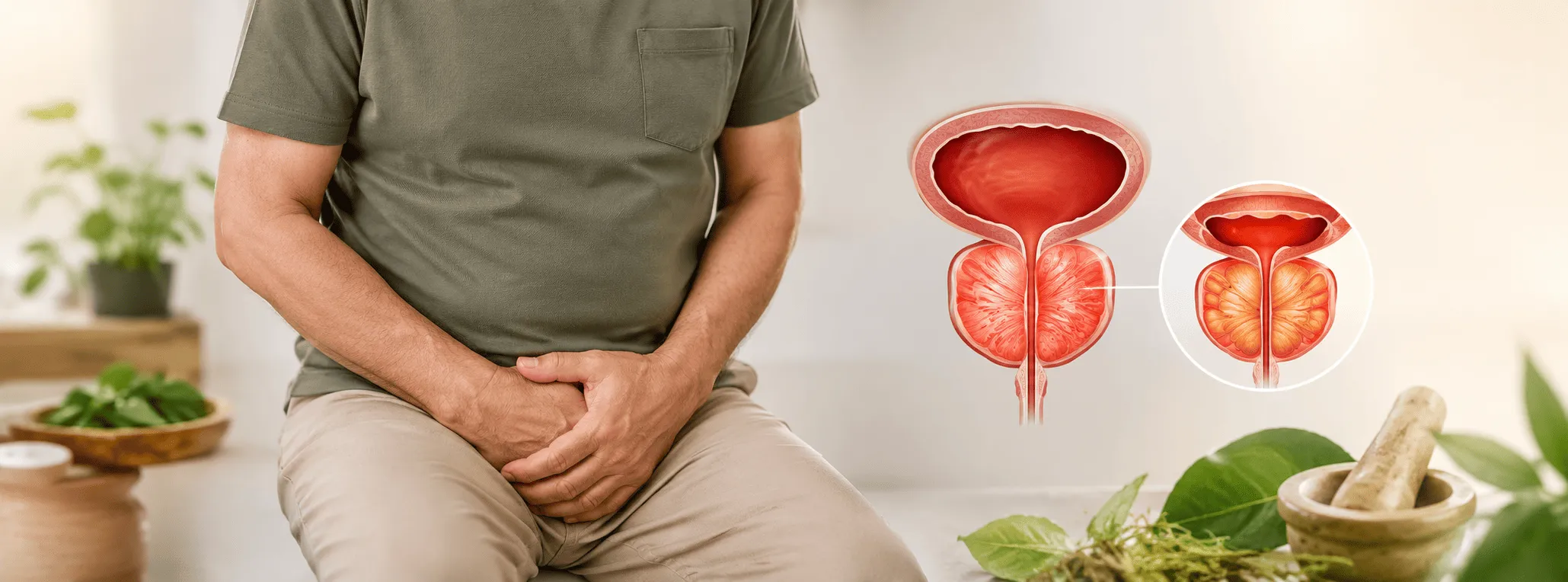
I frequently diagnose patients over 40 with benign prostatic hyperplasia (BPH). It is the leading prostate issue that I see in this age group, and thankfully, it is also non-cancerous. Because of this, I can assure patients that it’s not serious when I first mention their diagnosis. The phrase “enlargement of the prostate” can be very alarming and add undue stress on patients I see.
The prostate is small and critical to male reproductive health. Its role in fertility is in the processing of seminal fluid. It lies just below the bladder and surrounds the urethra. Bladder and prostate health is deeply interrelated. When the prostate enlarges, it encroaches onto the urethra and causes damage to the bladder wall. One of the major symptoms that patients with BPH come in for is the bladder’s inability to fully empty.
What are the Risk Factors for BPH?
When looking at my patients diagnosed with BPH, I see many of the same symptoms. This includes an imbalance of hormones, old age, having family members with BPH, being less physically active, having a body mass index that is classified as obese, and having diabetes. All but one of these has a poor metabolic condition in common, which shows that the prevention and treatment of BPH greatly relies on lifestyle.
Symptoms to Identify
There are a number of symptoms associated with benign prostatic hyperplasia (BPH) with the commonality being a constricted urinary passage paired with a weak bladder. Patients present with a number of symptoms including, but not limited to, an increased frequency of urination (especially at night) and an increased urgency to urinate. Additional symptoms may include straining to void, an interrupted urine stream, a urination stream that tapers, and a feeling of urinary retention. BPH patients may also present with incontinence, a painful or burning urination, and in the advanced stages, blood may be present in the urine. The latter surely requires an immediate workup.
Possible Consequences
If BPH symptoms are not managed, the patient may develop permanent damage to the urinary system. This again supports why a diagnosis at the right time and appropriate follow up with therapeutics is imperative versus waiting and managing the symptoms as if they are normal with aging.
Diagnosis of BPH
BPH is diagnosed with a digital rectal exam, urine sample, PSA (prostate-specific antigen) measurement, cystoscopy, transrectal ultrasound, and possibly a biopsy.
Mainstream Treatment Options
The usual treatment of this condition includes symptomatic management with medications or surgical interventions, if warranted. Darke also advocates for alterations in lifestyle, including reduced consumption of fluids, caffeinated beverages, and alcohol before going to bed. This in addition to regular exercise may reduce symptoms, which we agree on.
An Ayurvedic View of BPH
The Ayurvedic perspective on benign prostatic hyperplasia (BPH) views the condition as being similar to Vatashtila and Mutrakrichha. Mutrakrichha refers to the difficulty in urination due to the obstruction of the passage of urine. The Ayurvedic practitioner assumes the role of the clinician in the system and plans the treatment in a way that vata and kapha dosha are ridding of their imbalances and symptoms are alleviated with the gradual shinkage of the prostate.
Herbal and Cleansing Therapies
Taking an Ayurvedic approach to treating BPH has yielded excellent results in my clinical practice. Shamana chikitsa (palliative treatment) involves a number of herbal preparations that include Varanadi Kashaya, Punarnavadi Kashaya, Chandraprabha Vati, Kanchanara Guggulu, and Gokshuradi Guggulu. These preparations are used to treat BPH and are known to possess anti-inflammatory, antiseptic, and diuretic properties.
For the more complicated cases, Shodhana chikitsa (cleansing treatment) is used to remove the dosha imbalances. Panchakarma therapy is the main treatment of this approach and Vasti (medicated enema therapy) is included.
The treatment and herbal preparations used are specific to an individual and are based on a thorough assessment of the doshas rather than a generalized treatment.
Frequently Asked Questions
No. Benign prostatic hyperplasia (BPH) is not cancer of the prostate. Prostate cancer and BPH are both separate conditions, but they do require similar diagnostic tests.
Aging and its associated hormonal changes, family history, obesity, and diabetes are among the many risk factors associated with BPH.
Yes, Ayurvedic medicine combined with herbs, panchakarma therapies like Vasti, is very successful in treating enlarged prostate and in alleviating symptoms associated with Benign Prostatic Hyperplasia.
Symptoms like blood in the urine, total inability to urinate, and urinary tract infections / kidney related issues are of critical concern and should not be treated at home.
BPH is not a serious health issue, if dealt with early and in combination with standard treatment and Ayurveda. At Kottakkal Ayurveda, treatment is personalized based on one’s dosha and severity of symptoms. This personalization includes the use of herbs and may include lifestyle changes and panchakarma therapy.
About the Author
Dr. Nasreen Thacham Poyil is an Ayurvedic Physician at Kottakkal Ayurvedic Treatment Centre, Ajman. She graduated from VPSV Ayurveda College, Kottakkal and treats a wide variety of health issues like those related to the musculoskeletal system, the skin, the gastrointestinal system, gynecology, and neurology.
Book Appointment
Request slot for Ayurvedic Consultation