Parkinson’s Disease: How Ayurveda Supports Treatment and Quality of Life
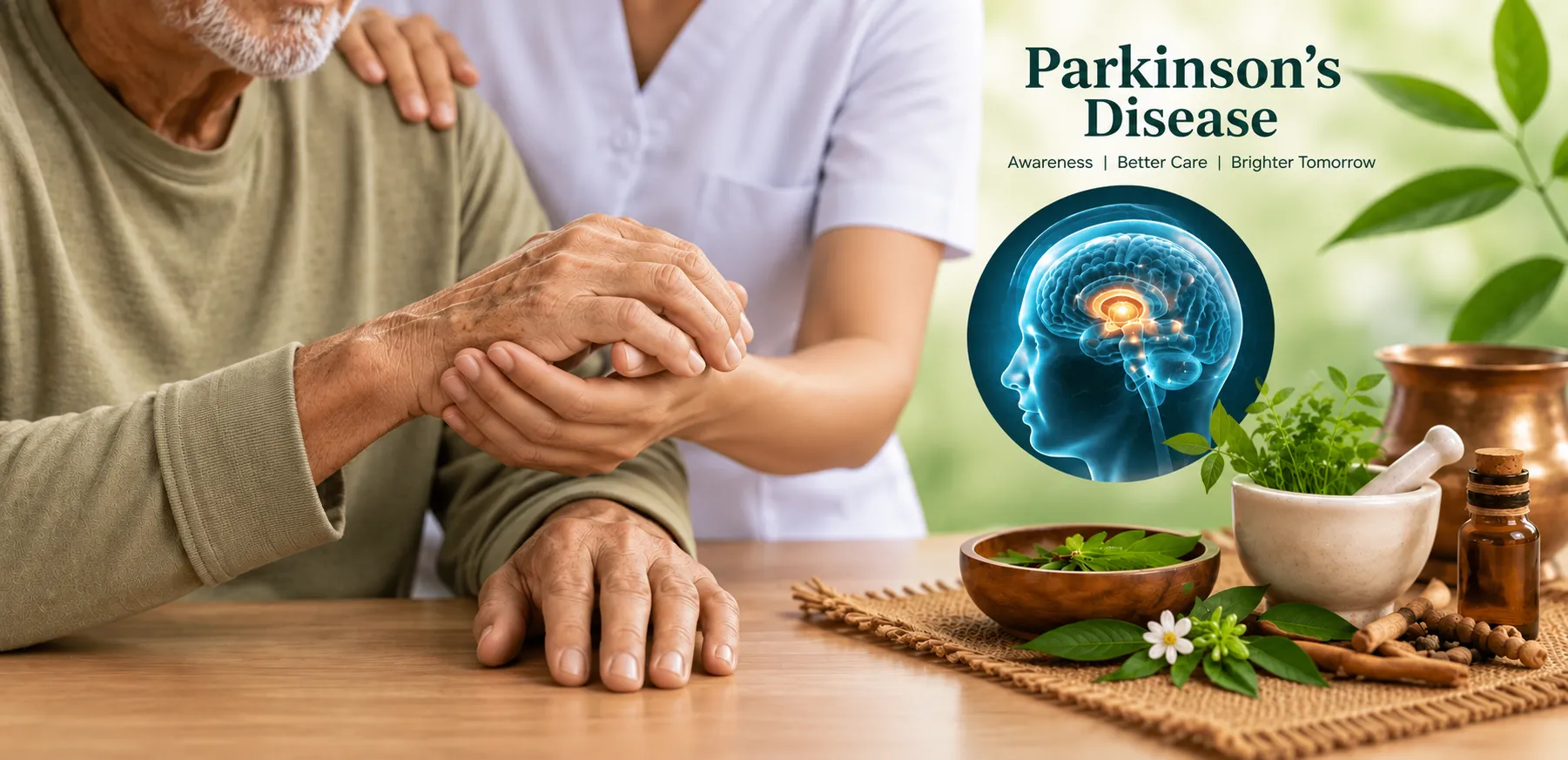
There are challenges that make Parkinson’s disease difficult to diagnose. The disease is progressive in a way that families and patients might not see the early signs because they develop slowly over time. Parkinson’s is a neurodegenerative disease that targets dopamine neurons in the brain in a specific region known as the substantia nigra. The disease is seen more in older patients. In my experience, it is seen more in the male population.
What’s an extra challenge with Parkinson’s is the way the disease progressive with each patient. It is exceedingly rare to see a patient have the same symptoms as another, or at least with the same severity.
What are the symptoms and the common progression of Parkinson’s disease?
Early stage. There are no observable motor symptoms, so there are no signs of the disease related to Parkinson’s that are easy to associate. Many will experience constipation or joint pain, severe fatigue, low orthostatic blood pressure, and a reduced sense of smell.
The motor phase. Patients eventually will develop pronounced motor symptoms. Bradykinesia and tremors are now more noticeable along with rigidity.
Later complications. After that, patients develop dysphagia, delirium, and memory loss as well as sleep disturbances. Many of these symptoms lead to and make pneumonia common and Parkinson’s disease to cause an early death. Because of this it’s important to try to manage symptoms before they develop.
Integrative Treatment of Parkinson’s Disease
In Ayurveda, the treatment of a condition starts with an understanding of the avastha (stage) of the disease, the dominant dosha of the condition, and the manifestation of the disease, as all these factors determine the course of treatment.
For cases that are stiffness dominant (Sthambha pradhana), the treatment plan may include therapies such as Pradhamana Nasya, Dhanyamla Dhara, Udvarthanam, Churna Pinda Swedam, along with some internal medicines based on the patient’s condition.
For cases that are dominant in tremors (Kampa pradhana) and are predominantly of vata dosha, the plan of treatment may need to include Nasya, Abhyangam (oil massage), Patra Pinda Sweda, Taila Dhara, Snehapana, Virechana, Anuvasana, and other internal medicines as necessary.
Herbal medicines that are neuroprotective and symptom-modifying are prescribed to improve cognitive function and quality of life, and to slow the degeneration of the cognition. This approach of Ayurveda does not aim for a cure (for there is no cure for Parkinson’s), but strives for meaningful improvement in the quality of life.
In case of toxin-induced (vishaja) Parkinson’s disease, which tends to be younger in onset and is associated with the use of psychiatric medicines and heavy metals, a detoxification-based treatment (vishahara chikitsa), rather than a dosha-based treatment of Ayurveda, is warranted.
In this approach, the inclusion of therapies that enhance the higher mental faculties and therapies that improve flexibility of the skeletal muscles and their functioning are critical, as this condition affects higher mental faculties and voluntary control of the skeletal muscles. For this reason, yoga, counseling and meditation are all vital adjuncts in the treatment of this condition.
Although there is great variation among patients in a number of factors, such as the stage of the disease, level of functioning and even the therapies they may be interested in, there are usually several specific breathing exercises (pranayama) and asanas (postures) that can be assigned safely.
Why Physiotherapy Is Important
I consistently highlight physiotherapy. It softens stiffness, and helps patients retain the flexibility and the range of motion of their joints. Without treatment, flexibility and range of motion decline over time. With Ayurvedic treatment, physiotherapy slows the decline of functionality.
Why It Is Important to Focus on Prevention
Recent studies have found evidence to support the idea that the gut may be related to the origin of Parkinson’s disease. Patients have constipation, which is now considered to be one of the first symptoms, many years before the other symptoms of the disease appear. In addition to focusing on the gut, I believe a healthy, balanced diet is preventative. Ayurveda long ago taught that a healthy, balanced diet and gut are perhaps the best defenses one can have.
Frequently Asked Questions
Ayurveda cannot cure Parkinson’s. The quality of life can be greatly improved, the symptoms and the progression can be managed with Ayurveda and the conventional treatment for Parkinson’s.
In the early stages of Parkinson’s, your gut’s health is compromised, your sense of smell is dulled, and you have fatigue, low blood pressure, and pain in your joints. These symptoms will appear long before the tremors and stiffness.
Treatment of Parkinson’s can benefit from yoga (including breathing exercises, certain poses, and meditation) and counseling.
New data indicates that the gut may influence the development of Parkinson’s disease. Constipation may be an early sign of Parkinson’s, years prior to the onset of other signs.
Because of the complexity of Parkinson’s Disease, and the variation in its progression, a multi-modal method incorporating Ayurvedic medicine based on the stage of the disease and the dosha, yoga, physiotherapy and gut health at its core, can significantly impact the management of gut health and the improvement of quality of life. Here at Kottakkal Ayurveda, we build each plan around the particular manifestations of the disease and work in alignment with other modalities.
About the Author
Nasreen Thacham Poyil, BAMS, is an Ayurvedic physician who specializes in musculoskeletal, dermatological, gastrointestinal, gynecological and neurological disorders. She graduated from VPSV Ayurveda College, Kottakkal. She now practices in the Kottakkal Ayurvedic Treatment Centre in Ajman.
Book Appointment
Request slot for Ayurvedic Consultation