Bell’s Palsy in Ayurveda: Causes, Symptoms, Ayurvedic Treatment, and Recovery
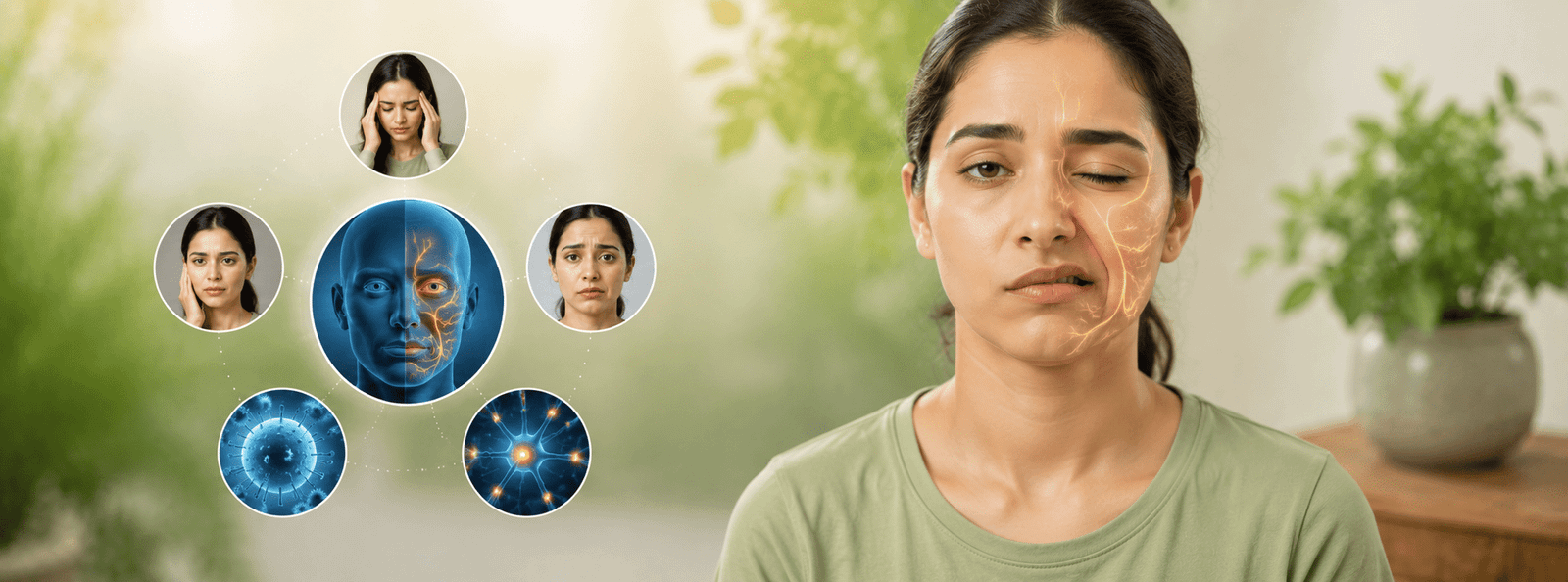
Bell’s palsy is a condition that causes sudden weakness or paralysis of the muscles on one side of the face. It can make simple activities such as smiling, blinking, eating, or speaking difficult, often leading to emotional stress and reduced confidence. Although the symptoms usually appear suddenly, early diagnosis and appropriate treatment can improve recovery and help restore facial function.
In Ayurveda, Bell’s palsy is managed through a holistic approach that focuses on balancing the body’s energies, nourishing the affected nerves, and improving muscle function. Personalized herbal medicines, Panchakarma therapies, external treatments, dietary guidance, and lifestyle modifications work together to support natural healing and overall well-being.
What Is Bell’s Palsy?
Bell’s palsy is a temporary form of facial paralysis that occurs due to dysfunction of the facial nerve (7th cranial nerve). The condition usually affects only one side of the face and develops suddenly over a few hours or days.
The facial nerve controls many important facial functions, including:
- Smiling and facial expressions
- Blinking and closing the eyes
- Movement of facial muscles
- Tear production
- Saliva secretion
- Taste sensation from the front part of the tongue
When this nerve becomes inflamed or compressed, it cannot properly transmit signals to the facial muscles, resulting in weakness or paralysis.
Bell’s Palsy in Ayurveda
According to Ayurveda, Bell’s palsy is closely associated with Ardhita, one of the Vata Vyadhi (neurological disorders caused by aggravated Vata Dosha).
Vata Dosha governs all movements of the body, including nerve impulses and muscle coordination. When Vata becomes aggravated, it may affect the nerves and muscles of one side of the face, resulting in facial weakness, stiffness, and loss of movement.
The primary goal of Ayurvedic treatment is to restore the balance of Vata Dosha, nourish the nervous system, improve circulation, and promote the natural recovery of facial muscles.
What Causes Bell’s Palsy?
The exact cause of Bell’s palsy is often unknown. However, it is believed to occur when the facial nerve becomes swollen, inflamed, or compressed.
Possible contributing factors include:
- Viral infections
- Inflammation of the facial nerve
- Exposure to cold wind
- Weakened immunity
- Stress
- Diabetes
- Pregnancy
- Upper respiratory infections
While Bell’s palsy can affect people of any age, prompt evaluation is important to rule out other serious neurological conditions.
Common Symptoms of Bell’s Palsy
Symptoms usually appear suddenly and affect one side of the face.
Common signs include:
- Sudden facial weakness
- Facial paralysis on one side
- Drooping of the mouth
- Difficulty smiling
- Difficulty closing one eye
- Drooping eyelid
- Twitching of facial muscles
- Dry eyes
- Dry mouth
- Reduced taste sensation
- Difficulty chewing food
- Slurred or unclear speech in severe cases
- Increased sensitivity to sound in some individuals
If facial weakness is accompanied by severe headache, weakness in the arms or legs, confusion, or difficulty speaking, immediate medical evaluation is essential to rule out other conditions such as stroke.
Ayurvedic Approach to Bell’s Palsy
Ayurveda does not focus solely on relieving symptoms. Instead, treatment is designed to restore balance within the body while supporting nerve function and muscle recovery.
The treatment plan is individualized based on:
- Body constitution (Prakriti)
- Dosha imbalance
- Severity of symptoms
- Overall health condition
- Duration of illness
Ayurvedic Treatment for Bell’s Palsy
1. Internal Ayurvedic Medicines
Ayurvedic physicians prescribe herbal formulations after carefully evaluating each patient’s condition.
Depending on individual needs, medicines may include:
- Ashtavarga Kashayam
- Dhanadanayanadi Kashayam
- Maharasnadi Kashayam
- Rasonadi Kashayam
- Ashwagandha Choornam
- Kalyana Avaleha
- Balarishtam
- Ashwagandharishtam
These formulations are selected according to the patient’s dosha imbalance and should only be taken under the supervision of a qualified Ayurvedic physician.
2. External Ayurvedic Therapies
External therapies play an important role in improving circulation, nourishing facial tissues, and supporting muscle function.
Depending on the patient’s condition, treatment may include:
Abhyangam (Therapeutic Oil Massage)
Warm medicated oils are gently massaged over the body to help balance Vata Dosha and improve circulation.
Thalam
Application of medicated herbal paste on the scalp to support nervous system balance.
Lepanam
Herbal paste application used to support tissue nourishment and reduce localized discomfort.
Ksheera Dhoomam
A traditional Ayurvedic therapy using medicated herbal steam prepared with milk to support facial muscle relaxation and nerve health.
Shiro Pichu
Application of medicated oil over the scalp using a cotton pad to calm the nervous system.
Shirodhara
A continuous stream of warm medicated oil poured over the forehead to promote relaxation, improve mental well-being, and help balance Vata.
Shiro Vasti
A specialized Ayurvedic therapy in which warm medicated oil is retained on the head for a specific duration under expert supervision.
Panchakarma for Bell’s Palsy
Depending on the patient’s condition, Ayurvedic physicians may recommend selected Panchakarma procedures to help balance aggravated Vata Dosha, support detoxification, and promote overall neurological health.
Panchakarma therapies are always customized according to individual health requirements.
Diet Recommendations in Ayurveda
Proper nutrition plays an important role in supporting recovery.
Recommended Foods (Pathya)
Ayurveda recommends warm, nourishing, and easily digestible foods, such as:
- Milk
- Ghee
- Butter
- Black gram
- Navara rice
- Red rice
- Wheat
- Garlic
- Raisins
- Warm mutton soup (where appropriate)
These foods are traditionally believed to help nourish tissues and balance Vata Dosha.
Foods to Avoid (Apathya)
To prevent aggravation of Vata, Ayurveda advises limiting:
- Dry foods
- Excessively bitter foods
- Fried foods
- Processed foods
- Hard-to-chew foods
- Cold and refrigerated foods
Maintaining a balanced diet complements Ayurvedic therapies and supports overall healing.
Lifestyle Tips During Recovery
Recovery from Bell’s palsy requires patience and consistent care.
Helpful lifestyle practices include:
- Get adequate rest.
- Protect the face from cold wind.
- Follow prescribed facial exercises.
- Stay hydrated.
- Practice stress management techniques.
- Follow the diet recommended by your Ayurvedic physician.
- Attend regular follow-up consultations.
Benefits of Ayurvedic Treatment for Bell’s Palsy
When provided under expert supervision, Ayurvedic treatment may help:
- Support facial nerve function
- Improve muscle coordination
- Reduce facial stiffness
- Improve facial symmetry
- Support natural healing
- Promote relaxation
- Improve overall quality of life
Treatment outcomes vary depending on the severity of the condition, overall health, and how early treatment begins.
Why Choose Kottakkal Ayurveda?
At Kottakkal Ayurveda, our experienced Ayurvedic physicians provide personalized treatment plans for neurological and musculoskeletal conditions based on classical Ayurvedic principles.
Our holistic approach combines:
- Detailed Ayurvedic consultation
- Personalized herbal medicines
- Traditional Panchakarma therapies
- External Ayurvedic treatments
- Dietary guidance
- Lifestyle recommendations
- Ongoing rehabilitation support
Our goal is to support recovery naturally while promoting long-term health and well-being.
Frequently Asked Questions
Can Ayurveda help manage Bell’s palsy?
Ayurveda offers a holistic approach aimed at balancing Vata Dosha, supporting nerve health, improving muscle function, and promoting overall recovery through personalized treatment plans.
How long does recovery take?
Recovery varies from person to person. Factors such as the severity of nerve involvement, overall health, and early treatment influence recovery time.
Is Bell’s palsy permanent?
Many individuals experience significant improvement over time. However, recovery differs for each person, making early medical evaluation and appropriate treatment important.
Can facial exercises help?
Facial exercises may be recommended as part of a comprehensive rehabilitation program to support muscle strength and coordination. They should be performed under professional guidance.
Conclusion
Bell’s palsy can have a significant impact on daily life, but timely diagnosis and appropriate care can support recovery and improve facial function. Ayurveda takes a comprehensive approach by addressing the underlying Vata imbalance while supporting nerve health through herbal medicines, traditional therapies, Panchakarma, diet, and lifestyle modifications.
If you or a loved one is experiencing symptoms of Bell’s palsy, consult the experienced Ayurvedic physicians at Kottakkal Ayurveda for a personalised evaluation and treatment plan tailored to your individual health needs.
Book Appointment
Request slot for Ayurvedic Consultation