Ginger in Ayurveda: Health Benefits, Uses, and Healing Properties of Shunthi & Ardraka
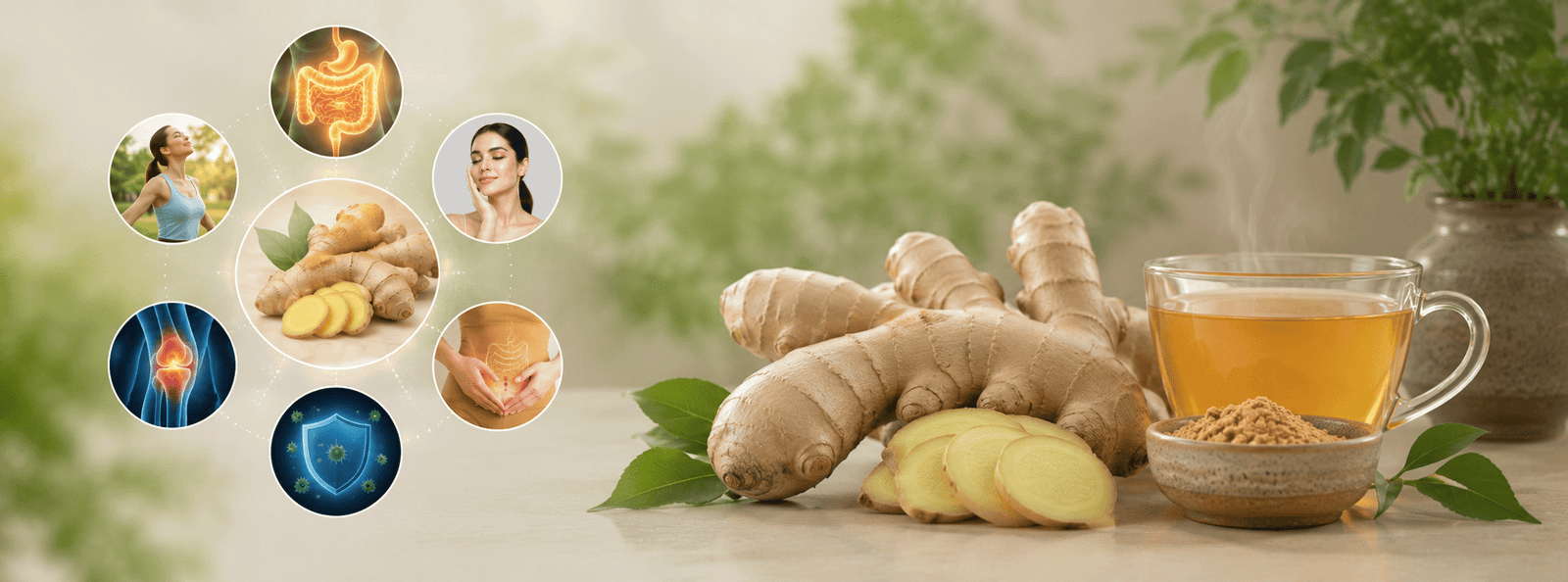
For thousands of years, ginger has been one of the most valued medicinal herbs in Ayurveda. Known for its warming nature and remarkable healing properties, ginger has been used to support digestion, boost immunity, relieve joint discomfort, and promote overall wellness.
Scientifically known as Zingiber officinale, ginger is not actually a root but a rhizome, an underground stem rich in bioactive compounds. In Ayurveda, ginger is available in two forms—fresh ginger (Ardraka) and dry ginger (Shunthi)—each offering unique therapeutic benefits based on an individual’s body constitution (Prakriti) and health condition.
Today, ginger remains an essential ingredient in Ayurvedic medicine, herbal remedies, and daily cooking, making it one of nature’s most powerful healing herbs.
What Is Ginger According to Ayurveda?
Ayurveda describes ginger as one of the most effective herbs for improving Agni (digestive fire). A healthy digestive system is considered the foundation of good health, and ginger is widely used to stimulate digestion, remove toxins (Ama), and maintain the balance of Vata and Kapha Doshas.
Fresh ginger (Ardraka) is generally considered more nourishing and mildly heating, while dry ginger (Shunthi) possesses stronger warming properties and is commonly recommended for conditions associated with excess Vata and Kapha.
Because of its broad therapeutic actions, ginger is frequently included in Ayurvedic formulations for digestive health, respiratory wellness, joint care, and metabolic balance.
Ayurvedic Properties of Ginger
According to Ayurvedic principles, ginger possesses the following qualities:
- Sanskrit Name: Ardraka (Fresh Ginger), Shunthi (Dry Ginger)
- Botanical Name: Zingiber officinale
- Taste (Rasa): Pungent
- Qualities (Guna): Light and Dry
- Potency (Virya): Heating
- Post-Digestive Effect (Vipaka): Sweet
These properties make ginger particularly beneficial for balancing Vata and Kapha doshas while supporting healthy digestion and circulation.
Health Benefits of Ginger in Ayurveda
1. Improves Digestion Naturally
One of ginger’s most well-known Ayurvedic benefits is its ability to strengthen Agni, the digestive fire.
Regular consumption may help:
- Improve digestion
- Support nutrient absorption
- Reduce bloating
- Relieve indigestion
- Promote comfortable bowel movements
Healthy digestion is the first step toward overall wellness in Ayurveda.
2. Helps Eliminate Ama (Toxins)
According to Ayurveda, poor digestion leads to the accumulation of Ama, or metabolic toxins, which can contribute to various health concerns.
Ginger is traditionally used to:
- Improve metabolism
- Support natural detoxification
- Promote digestive efficiency
- Reduce toxin accumulation
3. Supports a Healthy Immune System
Ginger contains naturally occurring antioxidants and plant compounds that help support the body’s natural immune function.
In Ayurveda, it is commonly recommended during seasonal changes to help maintain overall wellness and support resistance against common illnesses.
4. Helps Relieve Nausea
Fresh ginger has traditionally been used to ease occasional nausea and digestive discomfort.
It may be beneficial for:
- Motion sickness
- Morning discomfort during pregnancy (under medical guidance)
- Travel-related nausea
- Mild digestive upset
5. Supports Joint and Muscle Health
Dry ginger (Shunthi) is widely used in Ayurveda to help support joint mobility and muscle comfort.
Its warming nature may help:
- Reduce stiffness
- Improve circulation
- Support flexibility
- Promote comfortable movement
6. Promotes Respiratory Wellness
Ayurveda recommends ginger for maintaining respiratory health.
It has traditionally been used to support individuals experiencing:
- Seasonal cough
- Hoarseness of voice
- Mild throat discomfort
- Nasal congestion
- Kapha-related respiratory imbalance
7. Supports Healthy Circulation
The warming qualities of ginger help stimulate circulation and maintain healthy blood flow throughout the body.
Improved circulation may contribute to better energy levels and overall vitality.
8. Helps Maintain Healthy Metabolism
By strengthening digestive fire, ginger supports healthy metabolism and efficient digestion of food.
Ayurveda often recommends ginger as part of a balanced diet for individuals looking to maintain a healthy weight and improve metabolic efficiency.
9. Supports Women’s Wellness
Traditionally, ginger has been used to provide comfort during menstrual cycles by supporting healthy circulation and helping ease occasional menstrual discomfort.
10. Promotes Appetite
Fresh ginger is commonly used before meals to stimulate appetite and prepare the digestive system for efficient digestion.
Benefits of Fresh Ginger (Ardraka)
Fresh ginger is particularly valued for its ability to:
- Stimulate appetite
- Improve digestion
- Support healthy metabolism
- Reduce nausea
- Promote healthy circulation
- Help manage seasonal fever
- Support natural detoxification
- Act as a mild natural laxative
Benefits of Dry Ginger (Shunthi)
Dry ginger possesses stronger warming properties and is traditionally used to support the following:
- Joint health
- Muscle stiffness
- Back and neck discomfort associated with Vata imbalance
- Respiratory wellness
- Digestive health
- Occasional diarrhea
- Abdominal discomfort
- Healthy circulation
Ayurvedic Home Remedies Using Ginger
Ginger Before Meals
One of Ayurveda’s simplest digestive practices is consuming a small slice of fresh ginger before meals.
Mix:
- Fresh ginger slice
- A pinch of rock salt
- A few drops of fresh lemon juice
This combination helps stimulate digestive fire and supports better nutrient absorption.
Dry Ginger Paste
A paste made from dry ginger powder and water has traditionally been applied externally to areas affected by swelling or mild discomfort.
It has also been used on the forehead or sinus area during colds. However, it should be used with caution, especially by individuals with sensitive skin, and only under professional guidance.
How to Include Ginger in Your Daily Ayurvedic Routine
You can enjoy ginger in many ways, including:
- Fresh ginger tea
- Herbal decoctions
- Warm water infused with ginger
- Fresh ginger in curries and soups
- Dry ginger powder
- Ayurvedic herbal formulations
- Fresh ginger with lemon before meals
The most suitable form depends on your body constitution and overall health.
Who Can Benefit from Ginger?
Ginger may be beneficial for individuals looking to:
- Improve digestion
- Support immunity
- Maintain respiratory health
- Promote healthy circulation
- Support joint mobility
- Improve metabolism
- Maintain overall wellness
Individuals with certain medical conditions, those taking blood-thinning medications, or pregnant women should consult a qualified healthcare professional before consuming large amounts of ginger or herbal supplements.
Why Is Ginger Important in Ayurveda?
Ayurveda considers healthy digestion to be the foundation of good health.
Because ginger strengthens digestive fire, supports toxin elimination, balances Vata and Kapha, and promotes overall vitality, it has remained one of the most respected medicinal herbs in Ayurvedic practice for centuries.
Its versatility allows Ayurvedic physicians to recommend it in numerous herbal formulations tailored to individual health needs.
Experience Authentic Ayurvedic Care at Kottakkal Ayurveda
At Kottakkal Ayurveda, we believe that healing begins by restoring balance within the body. Our experienced Ayurvedic physicians carefully assess your Prakriti (body constitution) before recommending personalized herbal medicines, Panchakarma therapies, dietary guidance, and lifestyle modifications.
Whether you’re seeking digestive support, joint care, respiratory wellness, or holistic healing, our team provides authentic Ayurvedic treatments designed to improve your overall health naturally.
Visit our Ayurvedic centers in Dubai (Deira and Satwa), Ajman, and Sharjah to experience traditional Ayurvedic care delivered by experienced professionals.
Frequently Asked Questions
Is fresh ginger better than dry ginger in Ayurveda?
Both forms offer unique benefits. Fresh ginger (Ardraka) is commonly used to stimulate digestion and reduce nausea, while dry ginger (Shunthi) is traditionally preferred for joint health, respiratory support, and balancing Vata and Kapha.
Can I consume ginger every day?
Moderate daily consumption of ginger is generally suitable for many people as part of a balanced diet. However, the ideal amount varies depending on individual health needs and should be discussed with a qualified healthcare professional if you have any medical conditions.
Does ginger improve digestion?
Yes. Ayurveda considers ginger one of the most effective herbs for strengthening digestive fire (Agni), supporting healthy digestion, and improving nutrient absorption.
Can ginger help support immunity?
Ginger contains natural antioxidants and is traditionally used in Ayurveda to support the body’s natural immune function and overall wellness.
Conclusion
Ginger has earned its place as one of Ayurveda’s most powerful and versatile medicinal herbs. Whether consumed as fresh ginger (Ardraka) or dry ginger (Shunthi), it supports digestion, strengthens immunity, promotes healthy circulation, relieves joint discomfort, and helps maintain overall balance.
When incorporated into a healthy lifestyle and used under the guidance of an experienced Ayurvedic physician, ginger can become an important part of your long-term wellness journey.
If you’re looking for personalised Ayurvedic guidance, consult the experienced practitioners at Kottakkal Ayurveda to discover how traditional herbal therapies can support your health naturally.
Book Appointment
Request slot for Ayurvedic Consultation