How Ayurveda Classifies Brahmi and Its Medicinal Properties
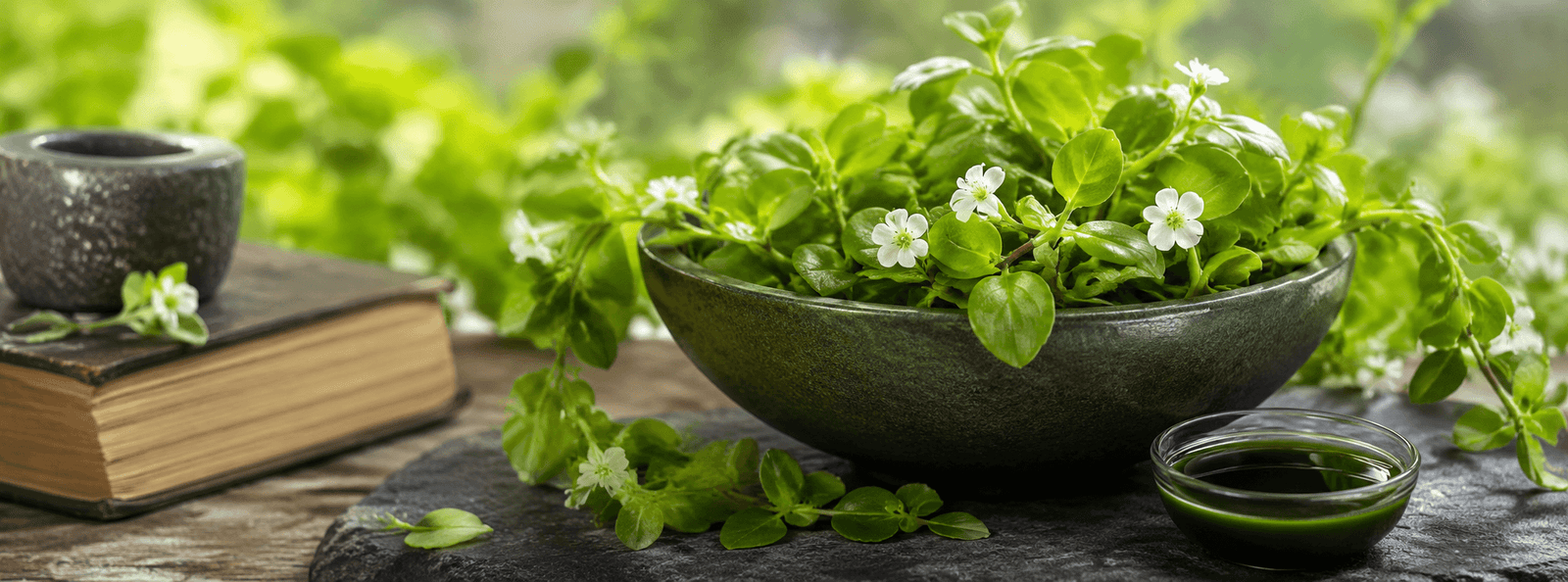
In Ayurveda, Brahmi (botanically Bacopa monnieri) is classified under Dravya Guna Shastra — the science of substances — using five parameters: Rasa (taste: bitter, sweet, astringent), Guna (qualities: light, mobile), Virya (potency: cooling), Vipaka (post-digestive effect: sweet), and Prabhava (special action: Medhya, or brain-enhancing). It primarily balances Vata and Pitta dosha and is classed as a Medhya Rasayana — a rejuvenative herb for intellect, memory, and nervous system health.
What Is Brahmi?
Before looking at classifications there is a naming misunderstanding that requires a solution. In some parts in North India and Kerala, “Brahmi” is used loosely to refer to Centella Asiatica (Gotu Kola which is also known as Mandukaparni). According to the Ayurvedic Pharmacopoeia of India, Brahmi is specifically referring to Bacopa monnieri and Mandukaparni is the proper name for Centella Asiatica. The distinction in clinical terms is important, as the two herbs have similar, but not identical, therapeutic properties. This article adheres to the Pharmacopoeia’s definition of Brahmi is Bacopa monnieri.
Brahmi is a tiny herb that grows in a creeping, succulent form that is found in wetlands and areas of marshy soil across India, Nepal, and other regions of Asia. It is mentioned in the foundational classical texts, such as those of the Charaka Samhita, Sushruta Samhita along with Atharva Veda, generally described as being recorded in Ayurvedic literature from around the 6th century AD.
The Five-Fold Ayurvedic Classification
Ayurveda analyzes every medicinal ingredient with a systematic framework called Dravya Guna Vijnana. Here’s the way Brahmi is classified in it:
1. Rasa (Taste): Brahmi carries the combination that includes Madhura (sweet), Tikta (bitter) as well as Kashaya (astringent) flavors and the bitter-astringent taste generally dominating on the tongue.
2. Guna (Physical Qualities): It’s classified by its names of Laghu (light for digestion) in addition to Sara (having an empathetic, pervasive quality) and is one of the reasons of the reason why it’s generally considered to be a good choice for removing mental weight and slow Kapha.
3. Virya (Potency): Brahmi has an a Sheeta (cooling) Virya. This cooling effect is the key to the reason it is utilized to reduce Pitta-related heat irritation, and inflammation.
4. Vipaka (Post-Digestive Effect): after digestion, it changes into Madhura (sweet) and confers a nourishing calm, tissue-building effect rather than a depleting effect.
5. Prabhava (Special/Unique action): Beyond what its flavor, power, or effects after digestion would suggest, Brahmi has a documented Prabhava of being Medhya – an immediate, specific action on cognition and intellect that the classical texts consider as a distinctive characteristic that the plant has.
Dosha effect: Its cooling potency and sweet vipaka mean Brahmi primarily balances Pitta, while its light, mobile quality also calms Kapha and, with suitable unctuous carriers like ghee or milk, helps settle Vata-driven restlessness.
Dhatu (Tissue) affinity: Brahmi is said to nourish Majja dhatu (nervous tissue) in particular, which aligns with its long-standing reputation as a nerve and brain tonic.
The Therapeutic Actions of Brahmi
Ayurvedic nighantus (lexicons) such as Bhavaprakasha and Dhanvantari Nighantu list a consistent set of actions: Medhya (intellect-promoting), Rasayana (rejuvenative), Ayushya (life-extending), Smritiprada (memory-enhancing), Svarya (voice-improving), Kaphahara and Vatahara (Kapha- and Vata-pacifying), and Vishahara (detoxifying). It is classified within the Medhya Rasayana group of herbs — a specific category of rejuvenatives that classical physicians reserved for supporting mental clarity, learning capacity, and long-term neurological resilience.
Traditional Uses Rooted in This Classification
Following directly from its classification, Ayurvedic practice has traditionally used Brahmi for:
- Cognitive support — memory, focus, and learning, consistent with its Medhya prabhava
- Calming the mind — traditionally used for anxiety and disturbed sleep, linked to its cooling virya and Vata-Pitta balancing action
- Skin and scalp health — used topically in oils, drawing on its Pitta-cooling and Kapha-clearing qualities
- General rejuvenation — as part of Rasayana therapy aimed at sustaining vitality with age
Common preparations include Brahmi Ghrita (medicated ghee), Brahmi Vati, Sarasvata Churna, and Sarasvatarishta, alongside fresh juice or dried powder of the whole plant.
What Modern Research Says
There have been recent pharmacological studies exploring Bacopa’s triterpenoid saponins (bacosides) with relation to their cognitive effects and clinical trials that survey regular Bacopa use and report improvement in verbal learning and memory recall and a reduction in anxiety in subjects. Bacopa is generally described as well-tolerated in these studies. Gastrointestinal side effects are reported to be mild. Research is ongoing in this area. As such, findings in this area should be read as supportive recommendations rather than conclusive.
Frequently Asked Questions
No. Brahmi (Bacopa monnieri) and Gotu Kola (Centella asiatica, also called Mandukaparni) are different plants that are sometimes confused due to regional naming overlap.
Primarily Pitta, due to its cooling potency, with a secondary balancing effect on Vata and Kapha.
It belongs to the Medhya Rasayana group, rejuvenative herbs specifically used to support intellect and nervous system function.
A Note Before Use
Brahmi, a traditional herb, is well documented but using the Ayurvedic system for classification does not replace the need for individual advice. People thinking about using Brahmi for a certain ailment and using other medicines, when pregnant, and when given to children, should first seek the advice of a qualified Ayurvedic practitioner or other healthcare professional.
Book Appointment
Request slot for Ayurvedic Consultation