Physiotherapy Treatment for Knee Osteoarthritis
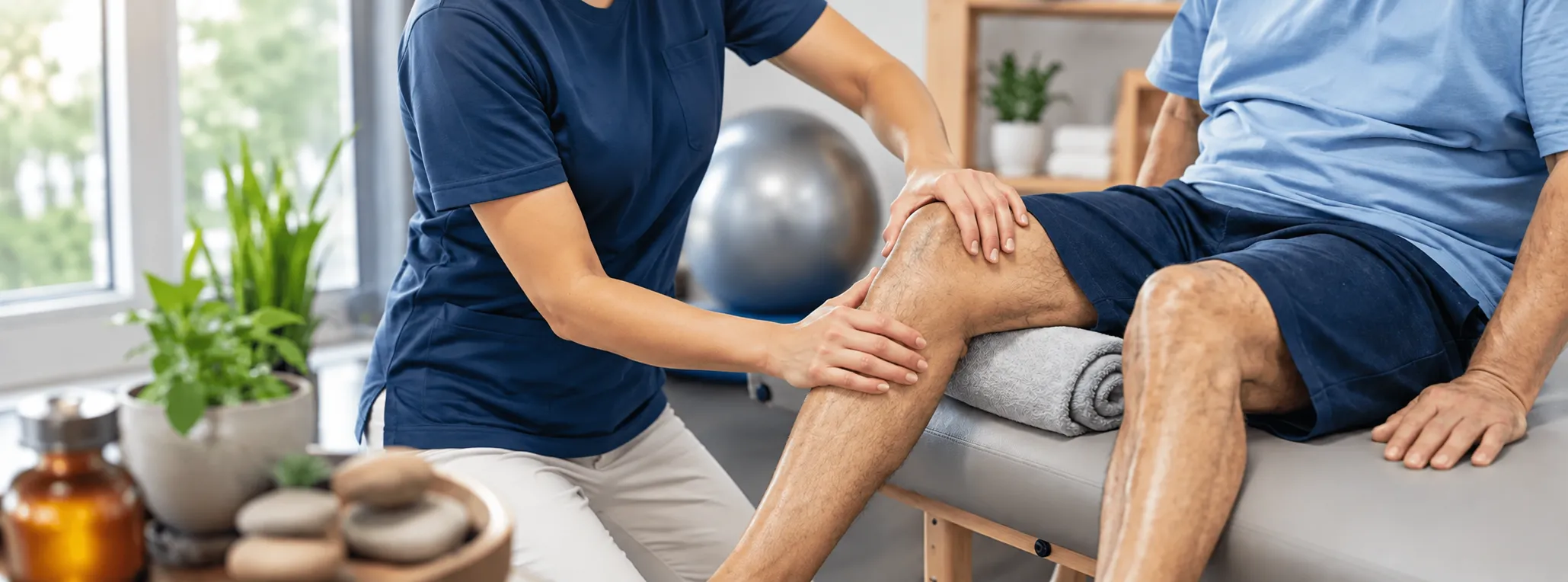
I often see patients with knee osteoarthritis, which I see as the body wearing down over time. Patients with knee osteoarthritis have symptoms that include stiffness, swelling, pain, and discomfort that worsens as they become more active and is accompanied by a cracking or grinding noise. Symptoms also include a swelling of the knee and an increase in the knee’s range of motion.
How the Condition Progresses at a Tissue Level
The chemical equilibrium in healthy articular cartilage is stable, but in the case of the development of osteoarthritis this equilibrium is altered. The collagen framework becomes disarrayed, making cartilage more rigid. This leads to surface cracks and degradation of the cartilage, which unfortunately leads to more deterioration since damaged cartilage has no self healing capacity.
With the continued degeneration of cartilage, damage will begin to impact the underlying bone surfaces which causes the bone to enlarges and develop spurs (osteophytes).
The Grading System for Knee OA
There are typically five grades of knee osteoarthritis which each support the determination of an appropriate treatment:
Grade 0 – Normal, healthy knee with no osteoarthritis.
Grade 1 – A very minor development of bone spurs with no pain or discomfort.
Grade 2 – Pain and stiffness develop after long periods of extended walking, and increased bone spurs are central to this, with cartilage remaining of normal size.
Grade 3 – Moderate OA. Increased joint stiffness, pain during movement, and discomfort after prolonged sitting or sleep along with a narrowed joint and deteriorated cartilage indicate worsening knee osteoarthritis.
Treatment Options: Conservative and Surgical
Both conservative and surgical treatment paths are available for osteoarthritis knee, although for the vast majority of patients, conservative treatment (with an emphasis on physiotherapy) is the preferred option.
Patient education, structured exercise therapy, and activity modification are parts of a conservative approach, as is weight loss and knee bracing when indicated. For patients with knee osteoarthritis, education and bracing therapy are first-line treatment methods. The approach yielding the best outcomes combines supervised physical activity with a home exercise program. While the benefits are lost after six months without continued exercise, there is a significant benefit of long-term consistency, especially when compared to short duration exercise.
Weight loss has a positive effect at every stage of knee osteoarthritis. For patients with symptomatic osteoarthritis and a body mass index of 25 or more, weight loss is suggested. The combination of a healthy diet and low-impact aerobic exercise tends to have the best outcomes.
Knee osteoarthritis with valgus or varus knee deformity can benefit from the use of a knee brace as it offloads the affected knee region.
Why Physiotherapy Should Start Immediately After Diagnosis
I suggest that all patients, even those with mild symptoms of knee osteoarthritis, begin physiotherapy immediately upon diagnosis. The late pattern of pain presentation in some patients and the significant degenerative changes in the joint (as seen in imaging) does not correlate. For this reason, immediate, even if mild, symptomatic intervention is critical.
Short-term benefits of exercise therapy include improvements to physical function as well as acting as a pain management solution. To ensure good exercise technique, I have patients perform exercises under my direct supervision for a period of time. After this, I then assign them the exercises to do at home as I feel confident that they have good form and enough confidence to do the exercises independently. Evidence shows combining supervised group exercises along with a home exercise program results in a better exercise outcome than doing the supervised or home exercises alone.
All Aspects of Physiotherapy
A core portion of treatment is education pertaining to the management of osteoarthritis. This includes the pain management, the long-term management and adjustment of daily routines, the role of weight management in joint health, and the development of a healthy and active lifestyle.
Exercise therapy, while providing numerous benefits, helps normalize knee joint range of motion, and decreases knee joint pain and swelling. Exercise therapy also provides stabilization to the lower kinetic chain, decreases the risk of cardiovascular disease, and positively impacts balance and agility. The combination of all these therapy benefits is an improvement in daily function.
Frequently Asked Questions
Primary knee osteoarthritis is generally considered to be related to aging and degeneration, while secondary knee osteoarthritis is the result of knee injury, obesity, misalignment of the lower extremity, and some metabolic diseases.
Yes. The use of physiotherapy, particularly exercise therapy, along with continued education, is recognized as a first-line treatment option for knee osteoarthritis. Physiotherapy has the potential to improve function and diminish pain for the majority of patients.
Yes. Weight loss is rendered beneficial at every stage of knee OA, and is specifically recommended for patients whose BMI is 25 or above, along with the inclusion of a low-impact aerobic exercise.
Knee osteoarthritis has five grades, with Grade 0 being normal, while the other grades show progressive stages of deteriorating cartilage with progressively narrowing joint space.
Despite being a progressive condition, knee osteoarthritis can benefit from physiotherapy-led conservative treatment, including patient education, exercise, weight management, and bracing, to a substantial degree. Although the treatment can be initiated at any stage, early intervention, even for mild symptoms, is proven to positively impact the long-term course of the condition and help patients avoid or delay the need for surgery.
About the Author
Dr. Seenath A., MPT, CDNT, COMT, CMCT, is a Physiotherapist at Kottakkal Ayurvedic Treatment Centre, specializing in the treatment of musculoskeletal and cardiorespiratory conditions, and is certified in dry needling, manual therapy, and cupping therapy for the musculoskeletal system.
📍 Kottakkal Ayurvedic Treatment Centre | Book a Consultation
Book Appointment
Request slot for Ayurvedic Consultation