Takradhara: The Traditional Ayurvedic Buttermilk Therapy
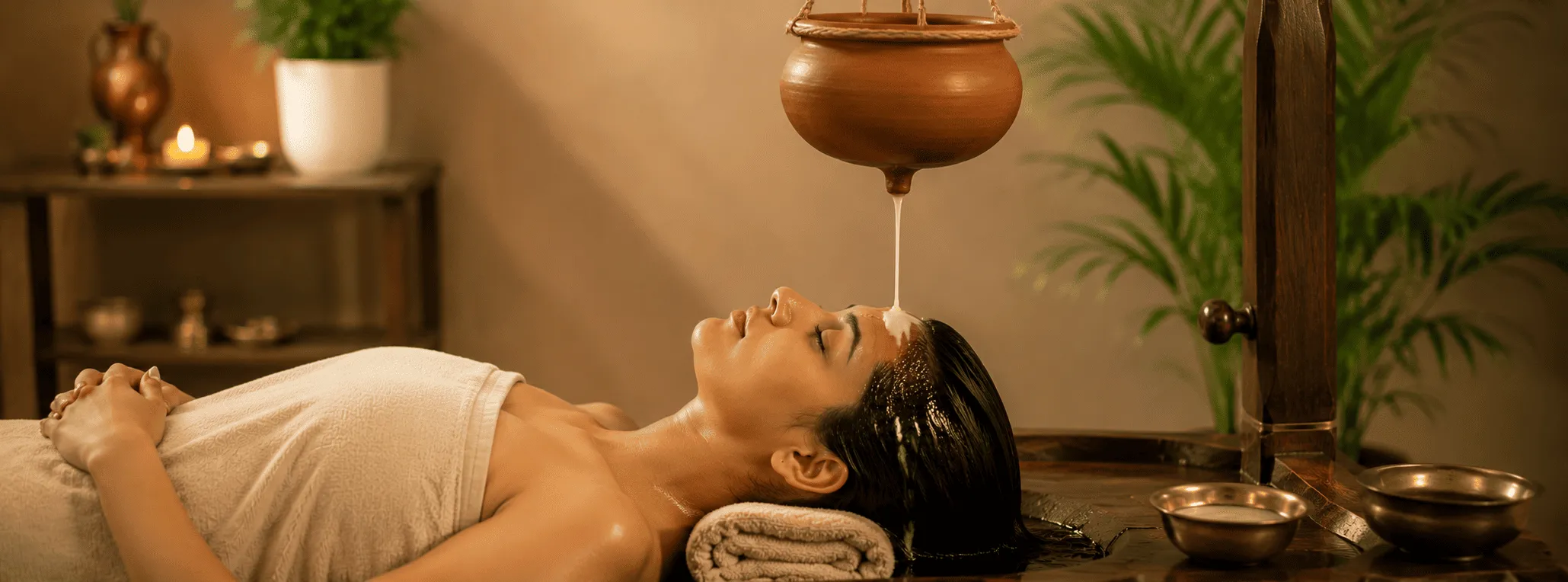
If you’ve heard of Shirodhara but not its cooler cousin, let me introduce you to Takradhara. The name gives it away once you break it down — “takra” means buttermilk, “dhara” means a continuous stream. That’s essentially the whole therapy: medicated buttermilk poured steadily over the body, usually the forehead, in an uninterrupted flow.
It’s not just any buttermilk, though. We process it with herbal ingredients like amalaki and mustha before it ever reaches the dhara vessel. Once it’s poured over the patient in that slow, continuous stream, it stimulates the nerves and genuinely improves nervous system function. There’s also a distinct cooling effect on both body and mind, which is part of what makes it useful across such a wide range of conditions.
How Is Takradhara Actually Done?
There are two versions of this, depending on what’s being treated. When it covers the whole body, we call it Sarvanga Takra Dhara. When it’s focused on just one area, that’s Ekanga Takra Dhara.
The technique itself looks a lot like Shirodhara, but there’s one important difference: the buttermilk can’t be heated, and it’s never reused once it’s been poured. Each session typically runs 45 to 60 minutes, though that varies depending on how severe the condition is and the patient’s individual constitution. Most treatment courses run 7 to 14 days, sometimes longer if the physician recommends extending it, and mornings tend to be the preferred time for the session.
One thing worth flagging clearly: this isn’t a therapy for everyone. It’s not recommended for people currently dealing with chronic sinusitis, colds, or fevers, so a proper assessment before starting matters more than people sometimes realize.
What Takradhara Actually Helps With
This is where it gets interesting, because the range of conditions Takradhara addresses is genuinely broad. On the skin side, I’ve seen it used effectively for chronic conditions like psoriasis and atopic dermatitis. For the nervous system, it’s used for neuropathies, migraines, and general stress and anxiety.
Sleep is another area where it tends to help — patients dealing with insomnia often notice real improvement, partly because the therapy has a calming effect that carries over well beyond the session itself. It’s also used for hypertension and for various eye and ear-related conditions that don’t always get discussed alongside Ayurvedic treatment but genuinely do respond to it.
The Broader Benefits
Beyond treating specific conditions, there’s a wider set of benefits patients notice over the course of treatment:
- Better blood circulation to the brain, along with nerve activation that helps reduce both stress and fatigue
- Healthier skin, and it’s traditionally been used to help prevent premature greying of hair
- A more balanced dosha, since much of Ayurveda comes back to correcting internal imbalance rather than just addressing symptoms
- Stronger immunity over time
- Relief from urinary issues and gastric discomfort, along with generally improved digestion
- Support for managing diabetes and diabetic neuropathy specifically
- Noticeably better sleep quality, which tends to be one of the first things patients mention
Getting the Most Out of Treatment
Takradhara isn’t something you do in isolation and expect lasting results from. Diet and daily routine matter just as much, both during the treatment period and afterward. I always walk patients through what to eat and how to structure their days during the course of therapy, since the internal work the buttermilk is doing gets undermined pretty quickly by poor food choices or an erratic schedule.
Every treatment plan starts with a proper assessment. What works for one patient’s constitution and condition won’t necessarily suit another, which is why this isn’t something to self-prescribe based on what you’ve read online — it genuinely needs a physician’s evaluation first.
Frequently Asked Questions
What is Takradhara used for?
Takradhara treats a wide range of conditions, including chronic skin conditions like psoriasis, neurological issues like migraines and neuropathy, stress, anxiety, insomnia, hypertension, and certain eye and ear conditions.
How is Takradhara different from Shirodhara?
The procedure is similar, but Takradhara uses medicated buttermilk instead of oil, and unlike oil in Shirodhara, the buttermilk is never heated or reused during treatment.
How long does a Takradhara treatment course last?
Sessions typically run 45 to 60 minutes, with a full course usually lasting 7 to 14 days, though this can be extended depending on the condition and the physician’s assessment.
Is Takradhara safe for everyone?
No — it’s contraindicated for people currently experiencing chronic sinusitis, colds, or fevers. A proper evaluation by an Ayurvedic practitioner is needed before starting treatment.
Takradhara is one of those Ayurvedic therapies that sounds simple on the surface — buttermilk poured over the body — but the range of conditions it genuinely helps with makes it far more significant than it first appears. If you’re dealing with chronic stress, skin issues, sleep trouble, or a neurological condition that hasn’t responded well to other approaches, it’s worth discussing whether Takradhara could be part of your treatment plan.
About the Author
Dr. Nasreen Thacham Poyil is an Ayurvedic Physician at Kottakkal Ayurvedic Treatment Centre, Ajman. A graduate of VPSV Ayurveda College, Kottakkal, she treats a broad range of conditions, including musculoskeletal, dermatological, gastrointestinal, gynecological, and neurological issues.
📍 Kottakkal Ayurvedic Treatment Centre, Ajman | Book a Consultation
Book Appointment
Request slot for Ayurvedic Consultation